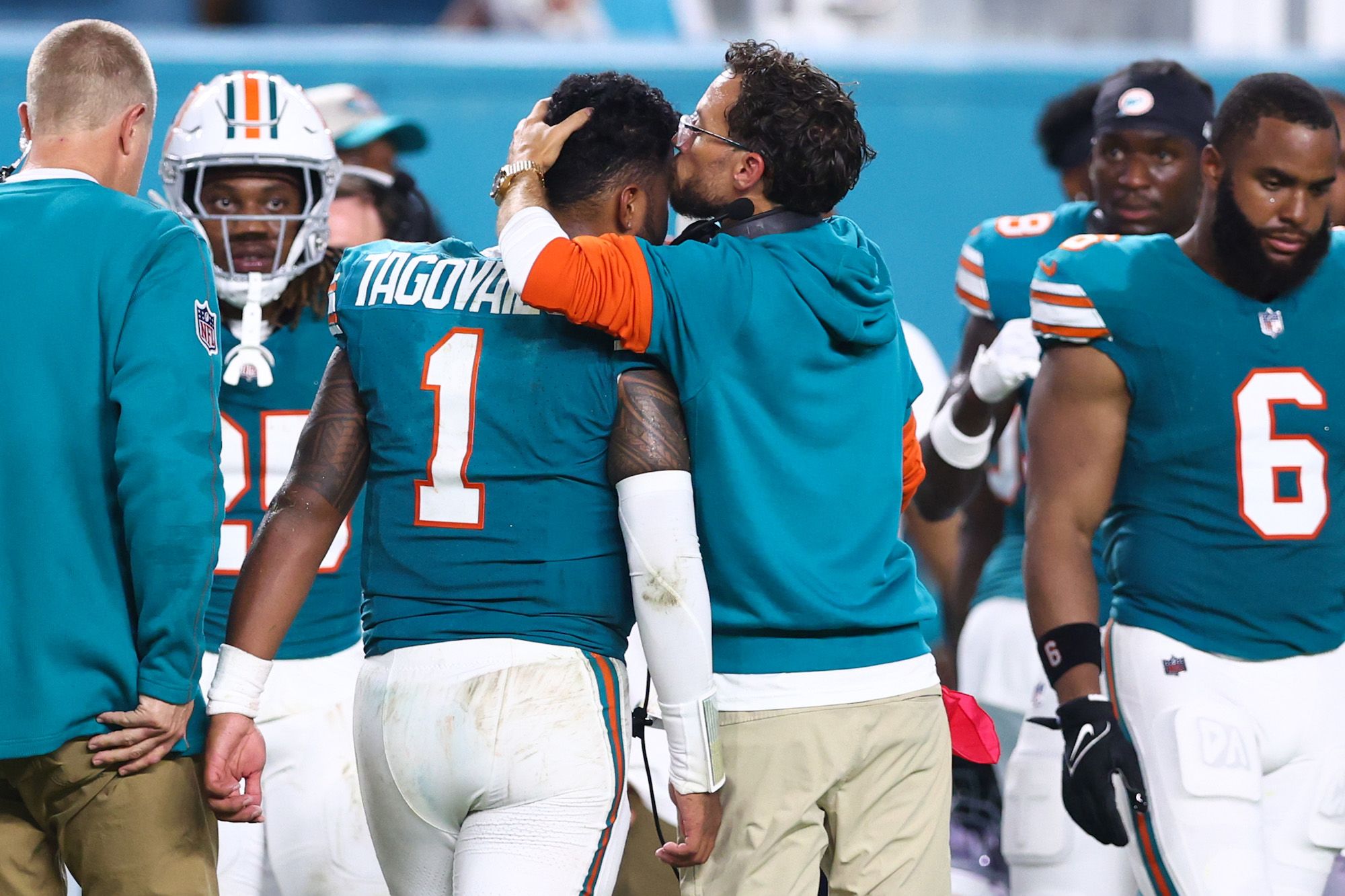
In the high-stakes world of professional football, where winning is often seen as the ultimate measure of success, Miami Dolphins head coach Mike McDaniel is taking a different approach. At the center of this approach is his quarterback, Tua Tagovailoa, whose health and well-being have become McDaniel’s top priority. After a tumultuous 2022 season marked by multiple concussions for Tagovailoa, McDaniel has made it clear that safeguarding his quarterback’s long-term health is far more important than any football outcome. This perspective underscores McDaniel’s commitment not only to the Dolphins’ success but also to the well-being of his players.
Tagovailoa, once touted as one of the most promising young quarterbacks in the NFL, saw his 2022 season disrupted by a series of traumatic head injuries that raised concerns across the league. For McDaniel, ensuring that Tagovailoa remains healthy—both on and off the field—is paramount. McDaniel’s approach to Tagovailoa’s recovery and future reflects a growing shift in the NFL, where player safety and long-term health are increasingly taking precedence over the pressure to win at all costs.
Tagovailoa’s Injury Concerns and 2022 Season
Tua Tagovailoa’s injury issues in the 2022 season were well-documented, beginning with a concussion suffered in Week 4 against the Cincinnati Bengals. The incident drew widespread attention after Tagovailoa displayed visible signs of a neurological injury, collapsing to the ground after a hit. His return to play just days after an earlier injury against the Buffalo Bills led to criticism of the team’s handling of concussion protocols, sparking debates across the NFL about player safety.
Despite returning to the field later in the season, Tagovailoa suffered another concussion in Week 16, leading to more questions about his long-term health and ability to continue as a franchise quarterback. The repeated head injuries caused significant concern, not just for Tagovailoa’s football future, but for his overall well-being.
The 2022 season was supposed to be a breakout year for the young quarterback, who was drafted fifth overall in 2020 with the hopes of becoming Miami’s long-term solution at the position. He had shown flashes of brilliance under McDaniel’s innovative offensive system, leading the Dolphins to a 3-0 start before the injuries derailed his season. However, the health risks associated with multiple concussions have since overshadowed his performance, and questions about his future in the league have persisted.
McDaniel’s Approach to Player Well-Being
In the wake of Tagovailoa’s injuries, Mike McDaniel has taken a deliberate approach to ensure that his quarterback’s health is prioritized over any immediate football considerations. McDaniel, known for his analytical and player-centric coaching style, has emphasized the importance of Tagovailoa making a full recovery before stepping back on the field. Rather than rushing Tagovailoa back into action, McDaniel has worked closely with the team’s medical staff to ensure that all necessary precautions are taken, demonstrating a level of care that has earned him praise from both players and fans alike.
Speaking about Tagovailoa’s health, McDaniel has made it clear that he views his players as people first, and athletes second. “Tua’s health is the most important thing to me,” McDaniel said in a recent interview. “His long-term well-being matters more than anything he can do on the football field.” This philosophy is a departure from the traditional win-at-all-costs mentality that often dominates professional sports, and it highlights McDaniel’s emphasis on the holistic development of his players.
The Dolphins’ handling of Tagovailoa’s recovery has been cautious, with McDaniel repeatedly stating that the quarterback’s return to the field will only happen when he is fully ready—physically, mentally, and emotionally. For McDaniel, the stakes extend beyond just football. In a league where concussions and head injuries have become a major point of concern, McDaniel’s approach is a model of how coaches can balance the demands of the game with the long-term health of their players.
The NFL’s Evolving Approach to Player Safety
McDaniel’s prioritization of Tagovailoa’s health is part of a broader trend in the NFL, where player safety has come under increased scrutiny. In recent years, the league has made several changes to its concussion protocol in response to growing evidence linking head injuries to long-term neurological issues such as Chronic Traumatic Encephalopathy (CTE). The NFL has implemented stricter rules for diagnosing concussions and ensuring players do not return to the field prematurely after head injuries.
The attention surrounding Tagovailoa’s situation during the 2022 season added momentum to these discussions. His high-profile injury served as a reminder of the risks associated with playing in the NFL, particularly for quarterbacks, who are often the target of aggressive hits. The Dolphins’ handling of the situation, especially under McDaniel’s leadership, has been closely watched as an example of how teams can—and should—put player safety above the pressure to perform.
While the NFL has made strides in recent years to address player safety, critics argue that more needs to be done. The league’s history with concussions and head trauma is complicated, with past players suffering long-term damage after their careers ended. The handling of Tagovailoa’s situation is seen as part of the NFL’s ongoing efforts to improve its approach to player health, especially in high-stakes moments when the temptation to push players to return quickly can be overwhelming.
Tua’s Future and McDaniel’s Support
As Tua Tagovailoa continues his recovery, the focus remains on his long-term health rather than short-term performance. In the lead-up to the 2023 season, McDaniel and the Dolphins organization have continued to work closely with Tagovailoa to ensure he is fully prepared—physically and mentally—before he steps back onto the field. While the team remains committed to supporting their quarterback, McDaniel has made it clear that the decision to return will rest on what is best for Tagovailoa’s health and well-being.
There is no doubt that Tagovailoa has the potential to be one of the league’s top quarterbacks when fully healthy. In the games he did play in 2022, he showcased his exceptional accuracy, pocket awareness, and ability to lead the Dolphins’ high-powered offense. His connection with wide receivers Tyreek Hill and Jaylen Waddle made Miami one of the most explosive teams in the league when he was under center.
However, the repeated concussions have cast a shadow over his future, leading to questions about whether it is safe for him to continue playing at such a high level of intensity. McDaniel has stated that the Dolphins will not jeopardize Tagovailoa’s health for the sake of a game, and that the organization will take every precaution necessary to protect their quarterback.
Looking ahead, McDaniel’s leadership will be crucial in guiding both Tagovailoa and the Dolphins through these challenges. His player-first approach, combined with his innovative offensive mind, has earned him the respect of the locker room and fans alike. As the Dolphins continue to navigate Tagovailoa’s recovery, McDaniel’s commitment to his quarterback’s health will serve as a powerful example of how the modern NFL is evolving to prioritize player well-being over the pressures of competition.
Conclusion: More Than Football
In a league where the pressure to win can often overshadow other considerations, Mike McDaniel’s approach to Tua Tagovailoa’s health stands out. By prioritizing his quarterback’s well-being over immediate football success, McDaniel has shown that player safety must come first, regardless of the stakes on the field. As Tagovailoa continues his recovery, his future in the NFL remains uncertain, but one thing is clear: McDaniel and the Dolphins are committed to ensuring that the young quarterback’s health is protected, both now and in the years to come.
This philosophy not only sets the tone for the Dolphins’ handling of injuries but also reflects the broader shift in the NFL towards greater responsibility for player safety. For McDaniel and the Dolphins, this isn’t just about football—it’s about the people who play the game.